
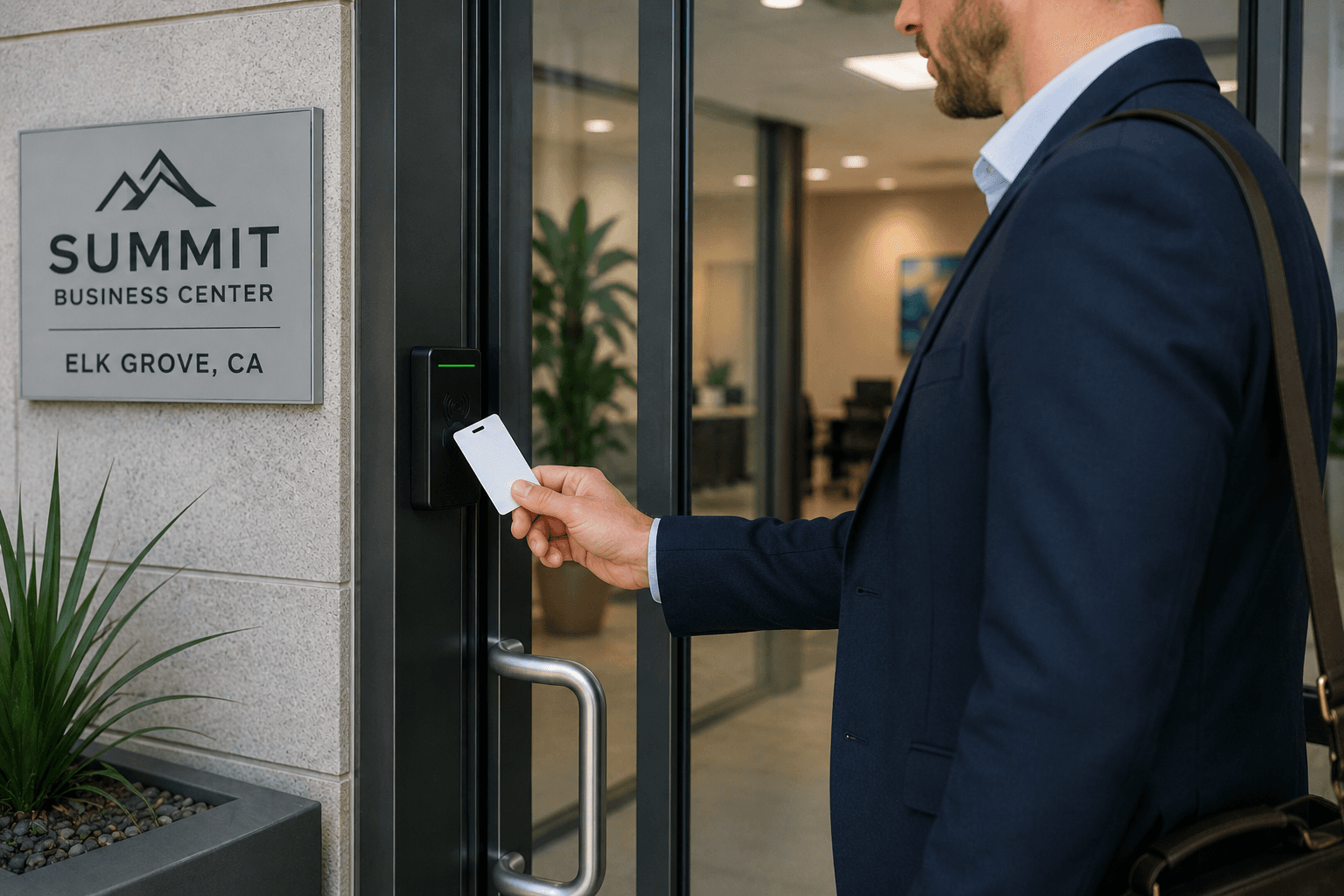
Short answer: Keycard entry system installation for an Elk Grove business typically replaces traditional locks at the main entrance and interior doors with electronic card or fob readers, giving management the ability to issue, restrict, and revoke access instantly without re-keying a single lock.
Why Do Businesses Move from Traditional Locks to Keycard Entry?
A mechanical key system has a built-in weakness: once a key is copied, lost, or not returned by a former employee, the only real fix is re-keying the affected locks, an expense that adds up quickly for a business with multiple doors or high staff turnover. Keycard entry removes that problem entirely. Lost a fob? Deactivate it from the management platform. An employee leaves? Their credential stops working immediately, with no locksmith visit required.
What Does a Keycard System Typically Include?
- Card or fob readers at exterior entrances and interior restricted doors.
- A management platform where credentials are issued, grouped, and revoked.
- Scheduled access rules that restrict certain doors to business hours or specific staff shifts.
- An audit trail of every entry event, useful for both security review and operational purposes like tracking staff arrival times.
See our access control services page for the full range of credential options, including badges, fobs, and mobile credentials.
Keycard vs. Keypad vs. Biometric: Which Credential Type Is Right?
Keycard and fob systems strike a practical balance for most Elk Grove businesses: faster than typing a PIN, more affordable than biometric readers, and easy for staff to use without training. Keypad codes get shared between employees the same way physical keys do, which undermines the audit trail a real access control system is meant to provide. Biometric readers add another layer of certainty but typically only make sense at a handful of higher-security doors, not a full building rollout. Most properties land on keycard or fob credentials as the default, layering other options in only where warranted. For more on that option, see our guide to biometric access control.
How Is Installation Planned Around Your Existing Doors?
Keycard system installation intersects with a building's electrical and door hardware, so a walkthrough of existing doors, wiring, and door frame conditions comes before any equipment is proposed. A vendor-agnostic, licensed integrator can recommend hardware suited to the property rather than steering every installation toward a single manufacturer's product line. Our why choose us page covers the approach our team takes to these assessments.
How Do You Verify Your Installer?
Because keycard installation involves electrical and low-voltage work, confirming a contractor's license status is a reasonable step before signing a proposal. California business owners can verify a contractor's standing directly through the California Contractors State License Board.
Frequently Asked Questions
How quickly can a lost or stolen keycard be deactivated?
Immediately. Credentials are managed through a software platform, so a lost card or fob can be deactivated the moment it's reported, without needing to change any locks.
Can different employees have access to different doors?
Yes. Access is typically grouped by role or department, so staff only have credentials for the doors relevant to their job.
Does a keycard system require rewiring every door in the building?
Not necessarily. Most installations focus on exterior entrances and specific restricted interior doors rather than every door in the building, based on what a site walkthrough identifies as needed.
Can a keycard system integrate with video surveillance?
Yes. Keycard access control is commonly paired with video surveillance at the same entry points, so an access event and its corresponding footage are tied together.
Ready to Replace Traditional Locks?
Schedule your site consultation or call 209-227-3428 to talk to a security specialist about a managed keycard system.